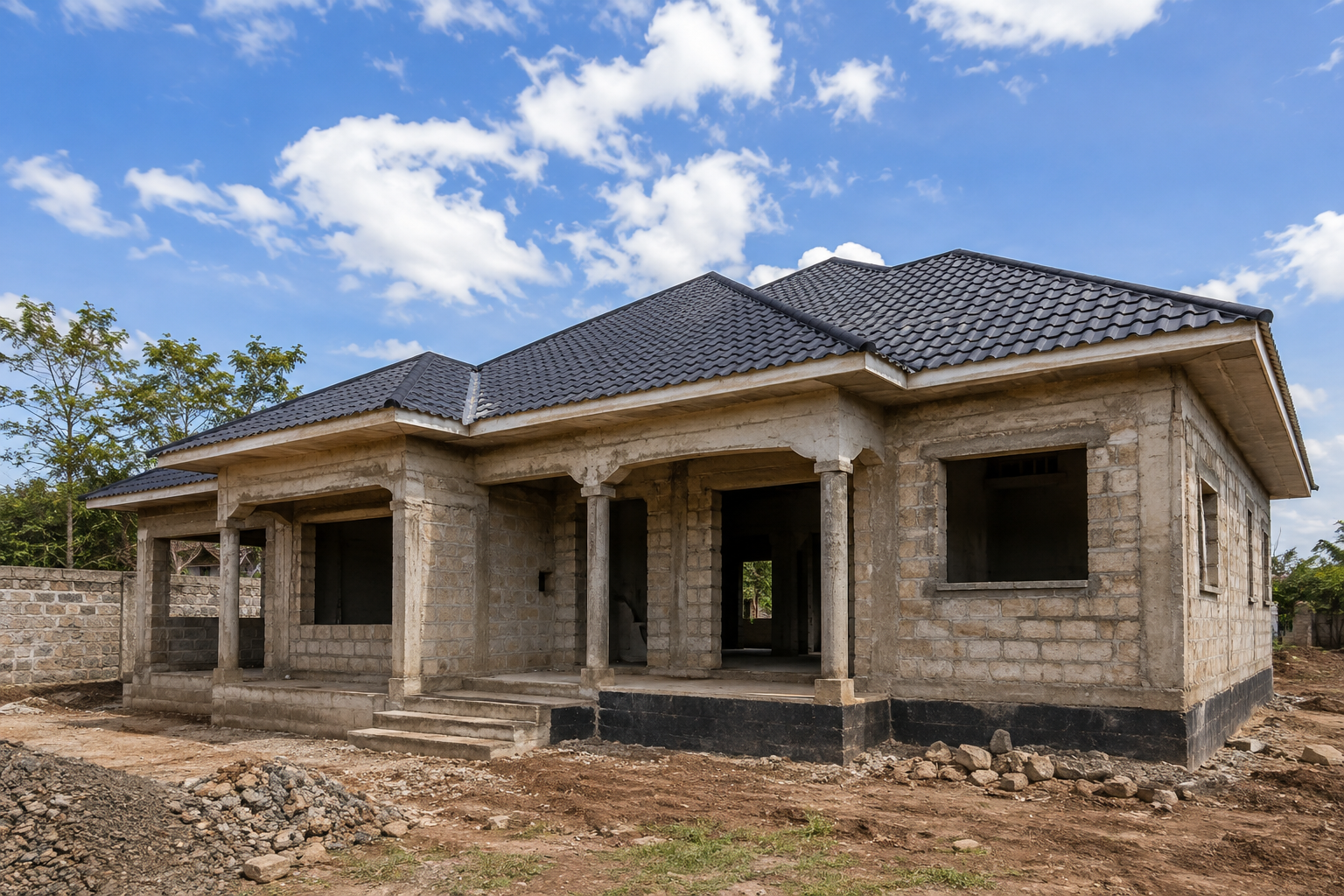
Congratulations! Your house structure is up – the walls are standing, the roof is on, and the doors are hung. But in many ways, the real work is just beginning.
What comes next is what transforms a cold shell into a warm, functional home. The finishing phase – interiors and exteriors – is where your vision truly comes to life. But it's also where budgets can spiral out of control if you're not careful.
In this guide, we'll walk you through everything you must do after completing the structure, and more importantly, how to distribute your finances wisely to avoid costly mistakes.
The Pre-Work Checklist: What to Do Before You Start
Before you spend a single shilling on finishes, take these critical steps. They will save you money and headaches down the road.
- Conduct a thorough structural inspection
- Fix all water leaks and plumbing issues
- Test electrical wiring and connections
- Check roof for proper sealing and flashing
- Ensure windows and doors are properly installed
- Measure all spaces accurately for finishing
- Plan electrical outlet and switch placements
- Create a detailed finishing schedule
Pro Tip: Before any finishing work begins, walk through every room with a contractor and take photos. Create a "defect list" – any cracks, uneven walls, or issues that need fixing before you paint or tile. This is your last chance to correct structural issues without damaging finished surfaces.
Smart Financial Distribution: How to Allocate Your Finishing Budget
For a typical home finishing project in Kenya, your budget should be allocated across these key areas. Percentages are based on a mid-range finish – you may adjust based on your preferences.
Electrical and Plumbing: 12 to 15 percent of budget. This covers final wiring, switches, sockets, light fixtures, plumbing fixtures, and water heaters.
Flooring: 10 to 15 percent of budget. This covers wooden, laminate, vinyl, tile, or carpet flooring for all rooms.
Painting and Finishes: 10 to 12 percent of budget. This covers interior and exterior paint, texture finishes, and sealants.
Gypsum Ceilings and Partitions: 6 to 8 percent of budget. This covers false ceilings, cove mouldings, decorative features, and wall partitions.
Cabinetry and Joinery: 12 to 18 percent of budget. This covers kitchen cabinets, wardrobes, storage units, and vanities.
Doors and Windows: 6 to 8 percent of budget. This covers internal doors, window frames, security grills, and finishes.
Exterior Works: 8 to 10 percent of budget. This covers landscaping, fencing, gate, exterior paving, and drainage.
Furniture and Furnishings: 12 to 18 percent of budget. This covers sofa, beds, tables, curtains, lighting, and décor.
Contingency Fund: 10 to 15 percent of budget. This is essential for unexpected expenses, cost overruns, and adjustments.
The Golden Rule: Never start finishing without a 10 to 15 percent contingency fund. In Kenya, building projects consistently overrun by 10 to 20 percent due to price fluctuations, material availability, and unforeseen issues. This is not optional – it is essential.
Interior Must-Do Items: What Absolutely Needs to Happen
1. Electrical and Plumbing
This is the backbone of your home – and the most expensive area to fix later. Spend wisely here.
For electrical work, install all switches, sockets, and light fixtures. Consider LED lighting – it saves up to 70 percent on electricity bills. Use quality brands like Schneider Electric for switches and Duraline for wiring. Cheap electricals are a fire risk.
For plumbing, install all sanitary fixtures including toilets, sinks, showers, and bathtubs. Test all connections under pressure.
Plan for the future by running extra conduits for TV, internet, solar, and speakers – even if you don't install them yet.
For water heating, install a solar water heater which saves 80 percent on water heating costs, or consider instant water heaters for kitchens and bathrooms.
2. Flooring
Flooring sets the tone for every room. Choose based on usage and budget.
For living areas, consider wooden flooring for its timeless, warm appeal or quality tiles which are easy to clean.
For bedrooms, wooden or laminate flooring provides warmth and comfort.
For kitchen and bathrooms, use porcelain or ceramic tiles – they are waterproof and easy to clean.
For high-traffic areas, laminate or vinyl is cost-effective and scratch-resistant.
Budget tip: You can use different flooring in different rooms to save money, for example tiles in high-traffic areas and wood in bedrooms.
3. Gypsum Ceilings and Partitions
Gypsum adds elegance, insulation, and soundproofing – essential for modern homes.
For ceilings, false ceilings hide wiring and create a polished look. Consider recessed lighting for added effect.
For partitions, create flexible room layouts without permanent structural changes.
For mouldings, cove mouldings and cornices add character and value to any room.
Cost tip: Simpler designs are cheaper. Skip complex curves if you are on a budget.
4. Painting and Finishes
Paint is the most cost-effective way to transform a space.
For interiors, use emulsion paint which is washable and breathable. Choose matte for bedrooms and silk for living areas.
For exteriors, use acrylic or exterior-grade paint – these are UV-stable and weather-resistant.
Preparation matters: Proper surface preparation including sanding, sealing, and filling cracks ensures a flawless finish.
Colour tip: Neutral colours like beige, grey, and white increase resale value, while accent walls in bolder shades add personality.
5. Cabinetry and Joinery
Custom joinery is one of the biggest investments in your home – but it pays off.
For kitchen cabinets, invest in quality materials like solid wood or moisture-resistant MDF.
For wardrobes, built-in wardrobes save floor space and add value to your home.
For storage, custom storage solutions make your home functional and clutter-free.
Budget tip: You can start with basic cabinetry and upgrade later, but don't skimp on kitchen cabinets as they are costly to replace.
Exterior Must-Do Items: Don't Forget the Outside
1. Landscaping
For lawn or grass, it adds curb appeal and provides a relaxing outdoor space.
For plants and trees, choose native plants like bougainvillea and hibiscus – they are low-maintenance and climate-appropriate.
For pathways and paving, choose concrete, cobblestone, or interlocking pavers based on your budget.
Budget tip: Start with the front yard as curb appeal matters most, then complete the backyard over time.
For irrigation, install a simple drip irrigation system which waters plants automatically and saves water.
2. Fencing and Gate
Security first: A sturdy fence and gate protect your investment.
Options include concrete walls, steel palisade, or chain link with electrified top – choose based on your neighbourhood.
For the gate, consider an automated gate for convenience and security.
Budget tip: A concrete wall is a one-time cost, while palisade fencing is cheaper but less secure.
3. Drainage and Water Management
For gutters and downpipes, channel rainwater away from walls and foundation to prevent damage.
For French drains, if you are in a low-lying area, install French drains to prevent flooding.
For the driveway, pave or concrete it – this makes cleaning easy and looks professional.
For water storage, install a water tank of 2,000 to 10,000 litres – this is essential for water-stressed areas in Kenya.
Common Financial Mistakes Kenyans Make During Finishing
Myth: "I will spend everything on the interior – the exterior doesn't matter as much."
Fact: Buyers and valuers judge by curb appeal. A well-finished exterior can increase your property value by up to 20 percent.
Myth: "I will save money by using cheaper materials – I can always upgrade later."
Fact: Upgrading later is twice as expensive because you pay for demolition and installation again. Invest in what you cannot change easily – floors, plumbing, electrical, and joinery.
Myth: "I don't need a contingency fund – I'm budgeting carefully."
Fact: Everyone needs a contingency fund. Building projects in Kenya consistently overrun by 10 to 20 percent. Without contingency, you will be forced to compromise on quality or take loans at high interest.
Myth: "I will do everything myself – contractors are a waste of money."
Fact: DIY can work for small tasks. But for electrical, plumbing, and finishing work, professional contractors save money in the long run by avoiding costly mistakes.
Debunking 5 Common Myths About Home Finishing in Kenya
Myth 1: "Cheaper tiles are just as good as expensive ones."
Fact: Cheap tiles crack, stain, and fade quickly. Quality tiles from reputable brands like Kajaria or Mombasa Ceramics last over 20 years – it's a 20-year decision, not a 2-year one.
Myth 2: "Gypsum ceilings are just decorative – they don't add real value."
Fact: Gypsum ceilings add insulation, soundproofing, and aesthetic appeal. Buyers actively look for homes with quality finishes – and gypsum is a top indicator of quality.
Myth 3: "I will use the same paint for interiors and exteriors to save money."
Fact: Interior paints are not UV-stable – they fade, crack, and peel within months when exposed to Nairobi's sun. Exterior paints are specially formulated to withstand weather. Don't mix them up.
Myth 4: "I don't need a professional floor plan – I can figure it out as I go."
Fact: Bad layouts cost money. A professional interior designer can save you 15 to 20 percent of your finishing budget by avoiding mistakes and maximizing space.
Myth 5: "I will buy cheap furniture now and upgrade later."
Fact: Cheap furniture doesn't last – you will replace it in 2 to 3 years. Quality furniture costs 2 to 3 times more but lasts 10 to 15 years. Buy less, but buy better.
Why Work with Nestora Interiors and Construction
Finishing a home is overwhelming – there are hundreds of decisions to make, suppliers to source, and contractors to manage. You don't have to do it alone.
Nestora Interiors and Construction brings over 7 years of experience in:
- Flooring solutions – from classic wood to modern vinyl and tiles
- Professional painting – interior, exterior, texture, and waterproof finishes
- Custom cabinetry and joinery – kitchens, wardrobes, and storage solutions
- Gypsum installations – ceilings, partitions, and decorative mouldings
- Office and commercial interiors – modern, productive workspaces
- Full construction and renovation services – from design to completion
We serve clients across Nairobi, Mombasa, Kisumu, Eldoret, Nakuru, Kiambu, and Machakos.
Ready to finish your home with confidence? Contact Nestora today for a free, no-obligation consultation and quote.
WhatsApp: +254 705 721 612
Call: +254 705 721 612
Visit: nestorainteriors.com
Frequently Asked Questions
How much does finishing a house cost in Kenya?
Finishing costs typically range from KSh 15,000 to 30,000 per square metre for a mid-range finish, and KSh 40,000 to 60,000 plus per square metre for high-end finishes. Costs vary widely based on materials, location, and scope of work.
Should I finish my house all at once or in phases?
If your budget allows, finish all at once – it is more cost-effective and less disruptive. If budget is tight, prioritize essential rooms such as bedrooms, kitchen, and bathroom, and phase non-essential areas like guest rooms and outdoor spaces.
What should I prioritize when finishing a house?
Prioritize what is hardest to change later: electrical, plumbing, flooring, windows, and built-in joinery. These form the backbone of your home and are costly to upgrade later.
How do I find a reliable contractor in Kenya?
Look for contractors with references, a portfolio of completed projects, and clear contracts. Ask for written quotes and timelines. Nestora has completed over 50 projects across Kenya – view our portfolio at nestorainteriors.com/projects.
How do I get a free quote for finishing my house?
Contact Nestora via WhatsApp or phone – we will schedule a free site visit, assess your needs, and provide a detailed, no-obligation quote. WhatsApp us today at +254 705 721 612.
Can I use different contractors for different aspects of finishing?
Yes, but coordinating multiple contractors is challenging. A single contractor or design-and-build firm like Nestora ensures consistency, accountability, and faster timelines. You will also save 15 to 20 percent by avoiding separate project management fees.
Final Thoughts
Finishing your home is an exciting journey – but it requires careful planning, smart budgeting, and the right team. By following this guide, you will avoid the most common mistakes and create a home you will love for years to come.
Remember: The foundation of great finishing is planning. Take your time, ask questions, and invest in quality where it matters most.
Need help with your home finishing project? Nestora Interiors and Construction is here for you. Contact us today for a free consultation.
Leave a Comment
Comments are currently closed. For inquiries, please contact us.