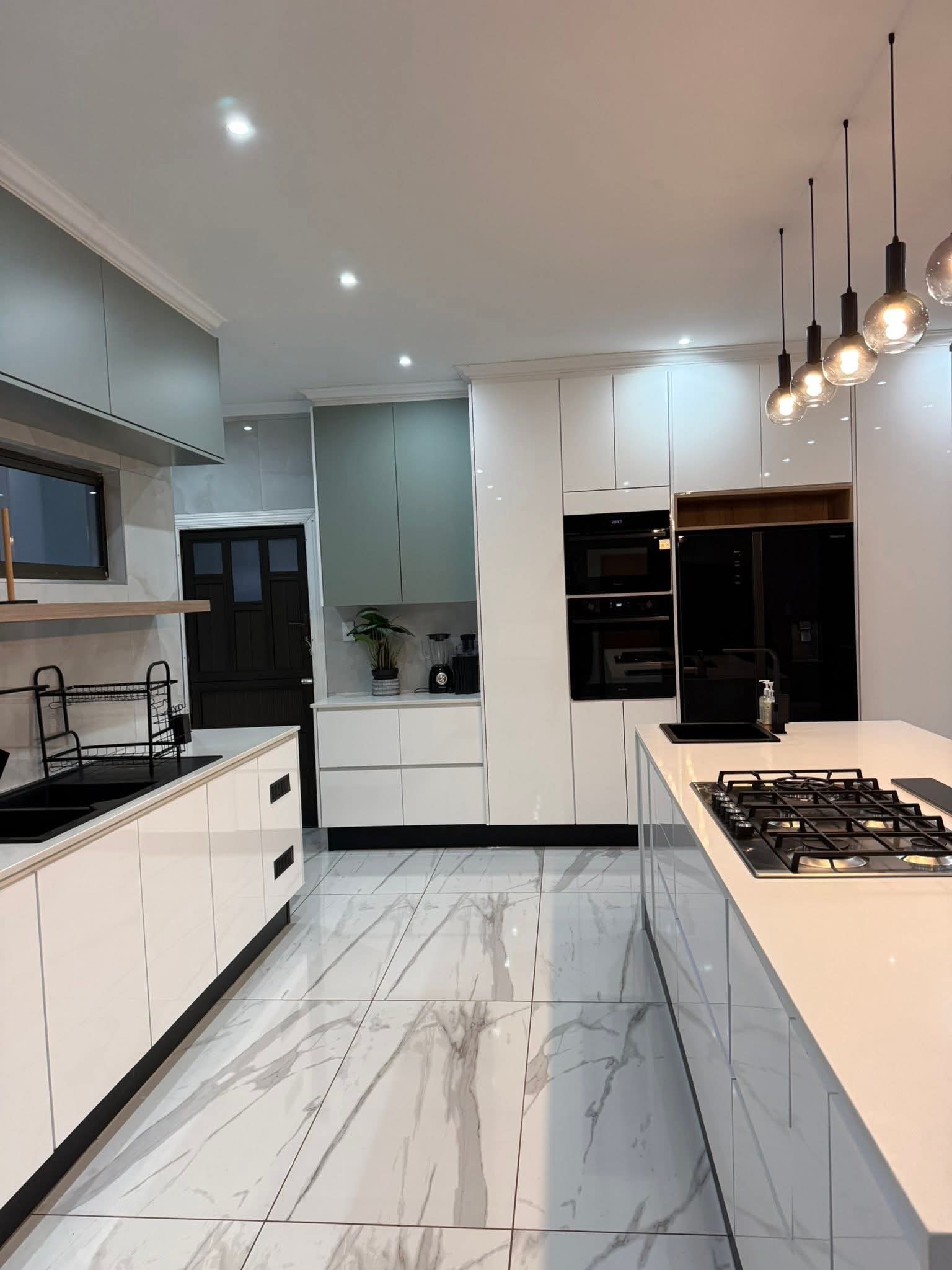
You’ve been scrolling through Pinterest, saving photos of sleek white kitchens with large islands and pendant lights. You imagine your family gathering there, morning coffee in hand. But then reality hits: where do you start? How much will it cost? What if something goes wrong?
Renovating a kitchen in Kenya can be stressful – but it doesn’t have to be. At Nestora Interiors, we’ve renovated dozens of kitchens across Nairobi, from tiny studio pantries to large family cooking spaces. Here are the 10 most important things to know before you start.
1. Plan your workflow before you choose finishes
The most beautiful kitchen is useless if you can’t move around. The classic “work triangle” still applies: the distance between your fridge, sink, and cooker should be efficient. A good layout:
Fridge → Sink (for washing ingredients)
Sink → Cooker (for cooking)
Clear counter space between each point.
Don’t place the cooker right next to the fridge – heat affects efficiency. Don’t put the sink in a corner with no elbow room.
Nestora tip: We always measure your existing space and create a scaled floor plan before ordering any cabinets.
2. Set a realistic budget – and add a 15–20% contingency
Kenyan homeowners often underestimate costs. A full kitchen renovation (cabinets, countertops, tiling, plumbing, electrical, painting) can range from:
Budget (basic laminate cabinets, standard tiles): KES 150,000 – 350,000
Standard (MDF shaker, quartz or granite, good appliances): KES 400,000 – 800,000
Premium (solid wood, imported stone, smart appliances): KES 900,000 – 2,000,000+
Always add a contingency of at least 15% for surprises – old plumbing that needs replacing, uneven walls, or last‑minute design changes.
3. Choose cabinets that last (material matters)
Your kitchen cabinets take the most beating. In Kenya’s climate, avoid raw MDF in wet areas – it swells. Better options:
Water‑resistant MDF (moisture‑resistant board) – affordable and durable if sealed well.
Plywood – stronger and more resistant to warping.
Solid wood (oak, mahogany) – beautiful but expensive and can expand/shrink with humidity.
Nestora’s standard: We use high‑density moisture‑resistant MDF with soft‑close hinges – a balance of cost and longevity.
4. Countertops: quartz is winning over granite
Both granite and quartz are popular in Nairobi. Here’s the difference:
Granite – natural stone, heat‑resistant, but needs annual sealing, can stain if not sealed.
Quartz – engineered, non‑porous, no sealing required, more colour options, slightly more expensive.
Approximate costs (supplied + installed):
Laminate: KES 5,000 – 12,000 per linear metre
Granite: KES 15,000 – 35,000 per linear metre
Quartz: KES 20,000 – 50,000 per linear metre
Nestora’s advice: For most families, quartz is the better long‑term investment.
5. Backsplash: not just decorative
A backsplash protects your walls from water, oil, and food splashes. It should cover the area between countertop and upper cabinets (about 450–600mm high). Popular choices in Kenya:
Ceramic tiles – cheapest, wide variety, easy to clean.
Porcelain tiles – denser, more durable, slightly pricier.
Glass or mirror – trendy but shows every drop.
Stainless steel – industrial aesthetic, very easy to wipe.
Labour cost: Tiling labour is roughly KES 250 – 500 per m² (excluding tiles).
6. Lighting is often an afterthought – don’t ignore it
One overhead light is never enough. A well‑lit kitchen needs layers:
Ambient (general) – recessed LEDs or a central fixture.
Task (work areas) – under‑cabinet lights for chopping and cooking.
Accent (display) – inside glass cabinets or above open shelves.
Nestora’s standard: We design lighting circuits separately so you can switch under‑cabinet lights on without the main ceiling light.
7. Plumbing and electrical must be planned first
Moving a sink or cooker is expensive. If you want to relocate plumbing or add new outlets, that work must happen before cabinets go in. In older Nairobi apartments, pipes may be rusted or incorrectly sized – budget for possible replacement.
Permits: For major changes (e.g., moving a gas line or load‑bearing wall), consult a professional. Nestora handles all necessary approvals with the building management or county.
8. Don’t forget ventilation
Kenyan kitchens can get smoky, especially when frying chapatis or cooking nyama choma indoors. A good extractor hood (ducted or recirculating) is essential. If ducting is impossible, invest in a powerful recirculating hood with charcoal filters.
Cost range: KES 15,000 – 80,000 depending on brand and style.
9. Storage solutions make the difference
A beautiful kitchen with no storage is useless. Consider:
Pull‑out corner units (magic corners) – use dead space.
Tall pantry cabinets – for dry goods.
Drawers instead of doors – easier access to pots and pans.
Pull‑out waste bins – hidden and hygienic.
Nestora’s standard: All our kitchen designs include a custom storage plan – we ask what you cook and how you use the space.
10. Hire a professional (it saves money in the long run)
Many homeowners think they can save by managing the renovation themselves or using a “fundi” without a design. The result is often:
Wrong measurements leading to gaps.
Poor quality finishes that need redoing within a year.
Delays and budget overruns.
A professional interior design and construction firm (like Nestora) will:
Provide accurate drawings and 3D renders so you see the final kitchen before work starts.
Manage all trades (tiler, electrician, plumber, carpenter).
Source quality materials at better prices.
Deliver on time and within budget.
Yes, you pay a design fee. But that fee is usually less than the cost of mistakes from a DIY approach.
Final thoughts
A kitchen renovation is a big decision, but it adds immense value to your home and improves your daily life. Plan carefully, invest in quality where it matters (cabinets, countertops, lighting), and don’t be afraid to ask for professional help.
At Nestora Interiors, we’ve guided dozens of Kenyan families through stress‑free kitchen renovations. Contact us for a free consultation – we’ll look at your space, listen to your needs, and give you a clear roadmap.
Leave a Comment
Comments are currently closed. For inquiries, please contact us.